
Painting metal seems simple only at first glance. In reality, the durability of the coating depends not only on the color or the brand, but first of all on the correctly selected coating system. That is why one of the most common questions before painting is what to choose for metal: primer, primer-enamel, or enamel.
These materials are not the same, although they are often confused or considered interchangeable. Each of them has its own purpose. One product is used to prepare the surface and improve adhesion, another combines protection and decorative finish, while the third is mainly intended for the final coat.
In this article, we explain the difference between primer, primer-enamel, and enamel, when it is better to use each option, and how to choose the right material for metal depending on operating conditions and the specific task.
Why it is important to choose the right coating for metal
Metal is constantly exposed to moisture, temperature changes, dust, chemicals, and mechanical stress. If the coating is chosen incorrectly, it may lead to rapid corrosion, peeling paint, loss of appearance, and repeated repainting costs.
The most common problems caused by the wrong material choice include:
- weak adhesion to the surface;
- rust appearing under the coating;
- peeling or cracking of the layer;
- uneven coverage;
- insufficient anticorrosion protection;
- short service life of the paint system.
That is why it is important to understand not only what to paint metal with, but also which coating system to choose.
What is a primer for metal
A primer is a material applied before the main coating. Its main purpose is to prepare the metal surface for further painting.
The main functions of a primer are:
- improving adhesion between the metal and the next layer;
- providing additional corrosion protection;
- helping to create a more even base;
- increasing the durability of the entire coating system;
- preparing the surface for enamel or another finishing material.
In simple terms, a primer is the base layer on which the next coating will hold.
When it is better to choose a primer
A primer is the right choice when:
- a multilayer coating system is required;
- coating durability is important;
- the metal will be used outdoors;
- better anticorrosion protection is needed;
- the surface is being prepared for a finishing enamel;
- the work is carried out according to a technology with higher quality requirements.
Primers are most often chosen for metal structures, gates, fences, industrial products, equipment, pipes, and various metal parts where not only appearance but also coating durability matters.
What is primer-enamel
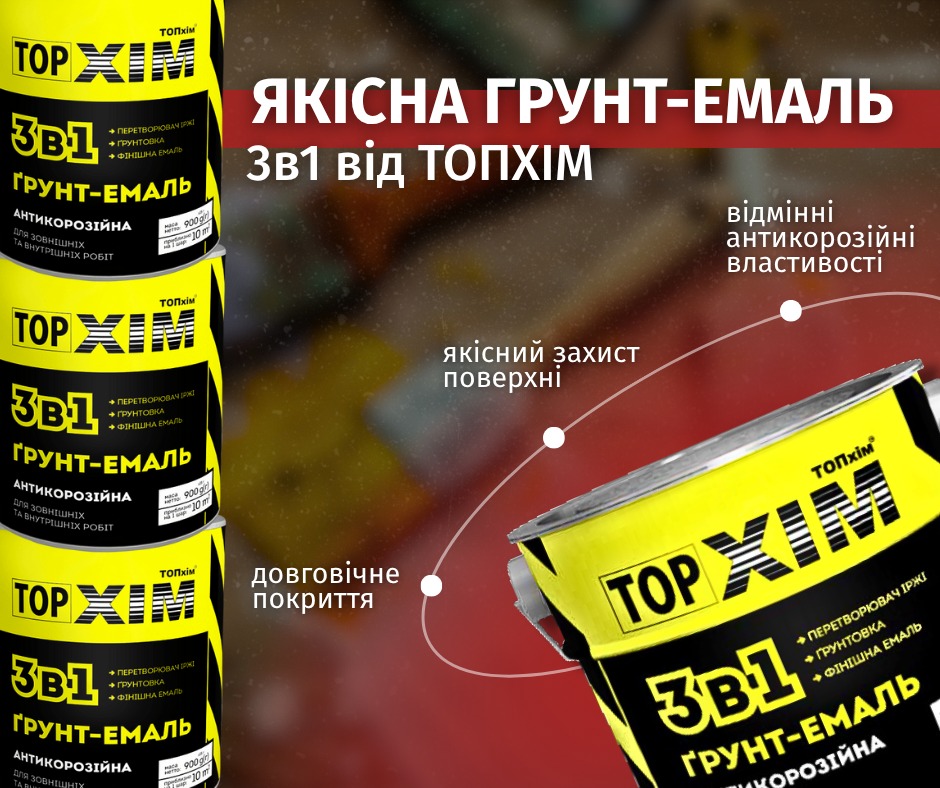
Primer-enamel is a combined material that combines the properties of a primer and an enamel. It is often used as a more convenient solution when it is necessary to protect the metal and give it a decorative appearance at the same time.
Such products are valued for their practicality because they reduce the number of work stages. In many cases, primer-enamel allows you to get a finished coating without applying a separate classic primer and a separate final layer.
When it is better to choose primer-enamel
Primer-enamel is suitable if:
- it is necessary to reduce the time required for the job;
- ease of application is important;
- the painting is done without a complex multilayer system;
- a metal surface needs to be renewed in household or semi-professional conditions;
- a balance between protection and speed is needed;
- you are painting gates, fences, garages, metal doors, household structures, or small metal products.
That is why primer-enamel is often chosen where simplicity, speed, and practicality are important.
What is enamel for metal
Enamel is mainly a finishing decorative and protective coating that forms the outer layer. It is enamel that provides the color, gloss, texture, and finished appearance of the surface.
Depending on the coating system, enamel may be applied:
- over a primer;
- over a properly prepared surface;
- in some cases, on already primed metal after preliminary preparation.
The main purpose of enamel is to create an aesthetic and protective outer layer, but on its own it does not always replace full surface preparation.
When it is better to choose enamel
Enamel is appropriate if:
- the surface has already been properly prepared;
- the metal has already been primed;
- only a finishing decorative layer is needed;
- the appearance of the coating is important;
- the task is to renew or repaint a surface within a properly selected coating system.
However, if enamel is applied without preparation in situations where a corrosion-protective base layer is required, the result may be significantly worse.
What is the difference between primer, primer-enamel, and enamel
The easiest way to explain it is this:
Primer is a preparatory layer.
Primer-enamel is a more universal “2 in 1” solution.
Enamel is a finishing coating.
The practical difference looks like this:
Primer
- is not always used as a finishing layer;
- improves adhesion;
- creates a base for the next layer;
- increases the durability of the system.
Primer-enamel
- allows the number of work stages to be reduced;
- protects and decorates at the same time;
- is convenient for faster jobs;
- is often used for household and semi-professional metal painting.
Enamel
- creates the finished external appearance;
- provides color and finish;
- usually works best as part of a complete coating system.
What is better for metal: primer or primer-enamel
There is no single answer because everything depends on the task.
A classic “primer + enamel” system is usually better where:
- a longer coating service life is required;
- the surface is exposed to increased stress;
- higher technological reliability is important;
- the structure will be used outdoors or in harsh conditions;
- more reliable anticorrosion protection is needed.
Primer-enamel is more often chosen when:
- the work needs to be completed faster;
- there is no need for a complex multilayer system;
- household metal structures are being painted;
- a practical and convenient option is needed for renewing metal.
So the question is not what is better “in general,” but what is better specifically for your object and conditions.
When it is better to choose a “primer + enamel” system
This option is more suitable in cases where a more professional and durable result is required.
For example:
- outdoor metal structures;
- gates, fences, and supports;
- production or warehouse facilities;
- technical surfaces with a corrosion risk;
- products with increased requirements for coating durability.
The advantage of this system is that each material performs its own separate function: the primer works for adhesion and protection, while the enamel works for finish and appearance.
When it is better to choose primer-enamel
Primer-enamel is convenient when a simpler and faster painting solution is needed.
For example:
- household metal structures;
- garage gates;
- fences;
- metal doors;
- small products;
- repair and renovation work.
This is a good option when the goal is to reduce application time and get a clear result without a complex multilayer technology.
When enamel alone is enough
Enamel alone should be used when the base has already been properly prepared or when the coating system allows it. For example, if the metal already has an appropriate primer layer or if repainting is being done over a compatible coating after proper preparation.
However, if the metal is bare, at risk of corrosion, or used in demanding conditions, enamel without the right base is often not the best solution.
What to pay attention to when choosing a material for metal
Before choosing primer, primer-enamel, or enamel, several factors should be considered.
Condition of the metal
Clean new metal and a surface with signs of rust are different tasks. The more difficult the condition of the surface, the more important the correct preparation and protection system becomes.
Operating conditions
Requirements for indoor work and outdoor use are different. Moisture, sunlight, temperature fluctuations, and mechanical impact increase the demands on the coating system.
Appearance requirements
If the priority is decorative effect, evenness, and the final visual result, it is important to choose the finishing layer correctly.
Work speed
If the coating needs to be applied quickly, primer-enamel is often chosen. If the priority is durability, a full coating system is usually more appropriate.
Level of stress on the surface
The higher the stress on the surface, the less sense there is in oversimplifying the coating system.
Common mistakes when choosing a coating for metal
The most common mistakes are:
Choosing only based on speed
Speed does not always mean durability. Sometimes skipping one stage leads to repainting again after a short time.
Applying enamel without preparation
If the metal is not properly prepared, even a good enamel will not provide the expected result.
Ignoring operating conditions
A material for indoor work and a coating for an outdoor metal structure are not the same solution.
Lack of a system approach
The coating should be selected not as a separate can of product, but as part of the whole painting technology.
A simpler practical approach to choosing
To make the choice easier, you can use this logic:
- if you need maximum reliability and durability, a primer + enamel system is usually the better option;
- if you need a fast and practical result, primer-enamel is often suitable;
- if the surface is already properly prepared and you need a finishing layer, enamel is used.
Conclusion
Primer, primer-enamel, and enamel are not the same thing. Primer works as a preparatory and protective layer, primer-enamel combines protective and decorative functions, and enamel mainly forms the finishing coat.
The right choice depends on the condition of the metal, operating conditions, appearance requirements, and the expected service life of the coating. For a more durable result, a “primer + enamel” system is often used, while for faster and more practical solutions, primer-enamel is a common choice.
Need help choosing the right coating for metal? Contact TOPHIM specialists — we will help you select a primer, primer-enamel, or enamel according to your task, surface type, and operating conditions.