
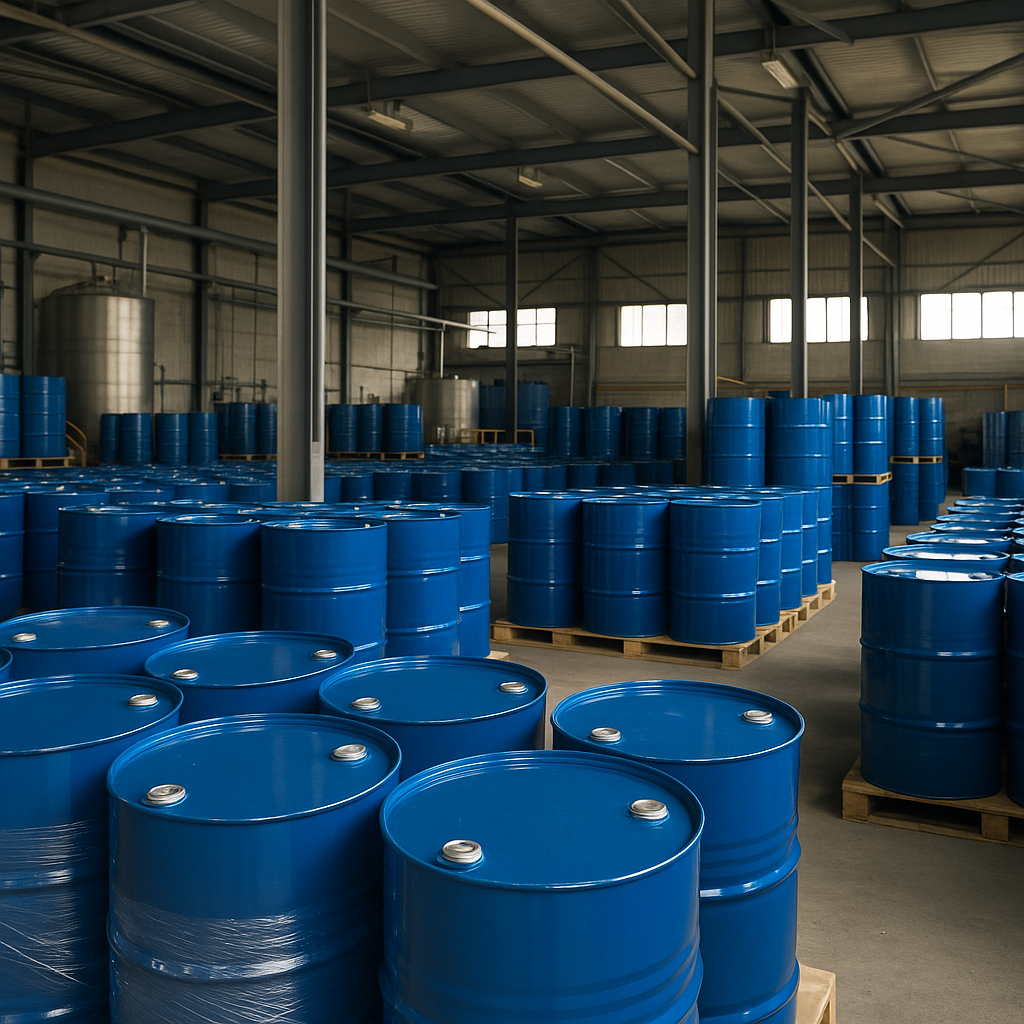
Choosing the right solvent directly affects the quality of painting, the drying speed of the material, the final appearance of the coating, and the convenience of application. One of the most common questions among painters, manufacturers, and sellers of paint and coating products is what the difference is between solvents 646, 647, and 650, and whether one can replace another.
At first glance, these products seem very similar, since all of them are used for thinning paints and coatings, cleaning tools, and preparing surfaces. However, in practice, there are significant differences between them in composition, aggressiveness, application area, and the final result you get after applying the material.
In this article, we explain the difference between solvents 646, 647, and 650, what each of them is suitable for, and which option is better depending on the material and surface type.
What solvents 646, 647, and 650 are used for
This group of solvents is commonly used for several main tasks:
- thinning paints, varnishes, enamels, and primers to working viscosity;
- improving application by brush, roller, or spray gun;
- cleaning tools after use;
- degreasing certain surfaces;
- preparing materials for even application.
Although they perform similar functions, these solvents work differently. One option is better for stronger action, another is more suitable for delicate surfaces, while the third is preferred when the quality of the final finish matters most.
What is the difference between 646, 647, and 650
The main difference between these solvents lies in the following parameters:
- chemical composition;
- level of aggressiveness toward the surface;
- evaporation speed;
- application area;
- compatibility with different paint and coating materials.
That is why it is not enough to choose based only on the number. Even if the products seem interchangeable, the actual result after use may differ significantly.
Solvent 646: properties and areas of application
Solvent 646 is one of the most well-known and widely used universal solvents. It is often chosen when strong action, good dissolving ability, and fast results are required.
When 646 is used
Solvent 646 is usually used for:
- thinning certain paints and coating materials;
- cleaning tools;
- removing paint residues;
- degreasing certain surfaces;
- jobs where intensive solvent action is required.
Features of 646
The main characteristic of this solvent is its higher aggressiveness compared to similar alternatives. That is why it works well with heavy contamination and dense materials, but requires caution when used on sensitive surfaces.
When 646 may not be suitable
Solvent 646 is not always the best choice if:
- the surface is sensitive to aggressive components;
- a milder effect is required;
- it is important to reduce the risk of damage to plastic or delicate coatings;
- a more controlled result is needed in fine finishing work.
Solvent 647: what makes it different
Solvent 647 is often considered a less aggressive alternative to 646. Its advantage is a more delicate effect on the surface while still maintaining sufficient efficiency for many typical tasks.
Where 647 is used
Solvent 647 is used for:
- thinning certain paints and coatings;
- body repair and maintenance work;
- cleaning surfaces before treatment;
- working with materials where excessive aggressiveness is undesirable;
- surfaces that require a more careful approach.
Advantages of 647
The main advantage of this solvent is its milder action. That is why it is often chosen where it is important to reduce the risk of damaging the coating or the base surface.
When to choose 647
Solvent 647 is a good option when:
- a gentler dissolving effect is needed;
- the work is performed on sensitive materials;
- a more controlled interaction with the surface is important;
- 646 may be too aggressive for the specific task.
Solvent 650: why it is chosen
Solvent 650 is usually considered a good solution for tasks where not only dissolving ability matters, but also application quality and a cleaner final result.
Where 650 is used
Solvent 650 is used for:
- thinning paint and coating materials;
- work where even application is important;
- achieving a more stable finishing result;
- preparing the material for accurate spraying or coating.
Features of 650
It is often chosen when the user wants not only the right working viscosity, but also better material behavior during application.
When it is better to use 650
Solvent 650 should be considered if:
- the quality of the coating after drying is important;
- it is necessary to reduce the risk of application defects;
- the work involves finishing layers;
- the priority is a neat final appearance.
What is the difference between 646 and 647
These two solvents are compared most often because they have a similar application area.
646:
- stronger in action;
- more aggressive;
- better suited for tougher cleaning tasks and intensive dissolving.
647:
- milder;
- more delicate;
- better for surfaces where excessive impact should be avoided.
In simple terms, if you need stronger action, 646 is more often chosen. If the priority is more careful work with the surface, 647 is usually the better option.
What is the difference between 647 and 650
These solvents are sometimes seen as similar in softness, but there is also an important difference between them.
647 is more often chosen for gentle dissolving and preparation work.
650 is more appropriate when special attention is paid to application quality and the final appearance of the coating.
In other words, 647 is more about gentler action, while 650 is more about neat work with the material and a better finishing result.
Can 646, 647, and 650 replace each other?
These solvents should not be considered fully interchangeable.
Yes, in some situations users try replacing one with another, but this always involves risk. Even if the material seems to mix normally, problems may appear during application or after drying:
- poorer flow-out;
- changes in drying speed;
- streaks;
- cloudiness;
- loss of gloss;
- reduced adhesion;
- coating defects.
The best solution is to follow the recommendations of the manufacturer of the specific paint or coating material and select the solvent not “by guess,” but for the specific task.
Which solvent to choose: 646, 647, or 650
To make the choice easier, here is a practical approach:
Choose 646 if:
- strong action is required;
- you need fast and effective cleaning;
- the material or surface allows a more aggressive impact.
Choose 647 if:
- a milder effect is needed;
- the surface is more sensitive;
- careful handling during work is important.
Choose 650 if:
- application quality is the priority;
- the appearance of the final finish matters;
- a more accurate result is required.
Common mistakes when choosing a solvent
Here are the most common mistakes made when choosing between 646, 647, and 650:
Choosing only by price
The cheapest option is not always the most cost-effective one. If the solvent is not suitable for the material, it can lead to defects, rework, and extra costs.
Focusing only on popularity
Just because someone is used to working with 646 does not mean it is the best option for every task.
Ignoring the surface type
The same product may behave differently on metal, plastic, or highly sensitive coatings.
Using it without a test application
Before starting a large job, it is better to check compatibility on a small area or in a small amount of material.
How to avoid mistakes when choosing
To select the right solvent, it is important to consider:
- what material you are going to thin;
- how the product will be applied;
- what surface is being treated;
- how delicate the action should be;
- whether the appearance of the final finish is important;
- what the material manufacturer recommends.
If you have doubts, it is better to ask for professional advice than to risk the entire batch of material or the finished coating.
Conclusion
Solvents 646, 647, and 650 are not the same, even though they are often used for similar tasks.
646 is more active and aggressive.
647 is milder and more delicate.
650 is a good choice when application quality and the final finish matter.
The right choice depends not on the number itself, but on your task: the type of material, the surface, the application method, and the requirements for the final coating.
Need help choosing solvent 646, 647, or 650 for your specific task? Contact TOP KHIM specialists — we will help you select the best option for production, workshop use, retail, or wholesale supply.