
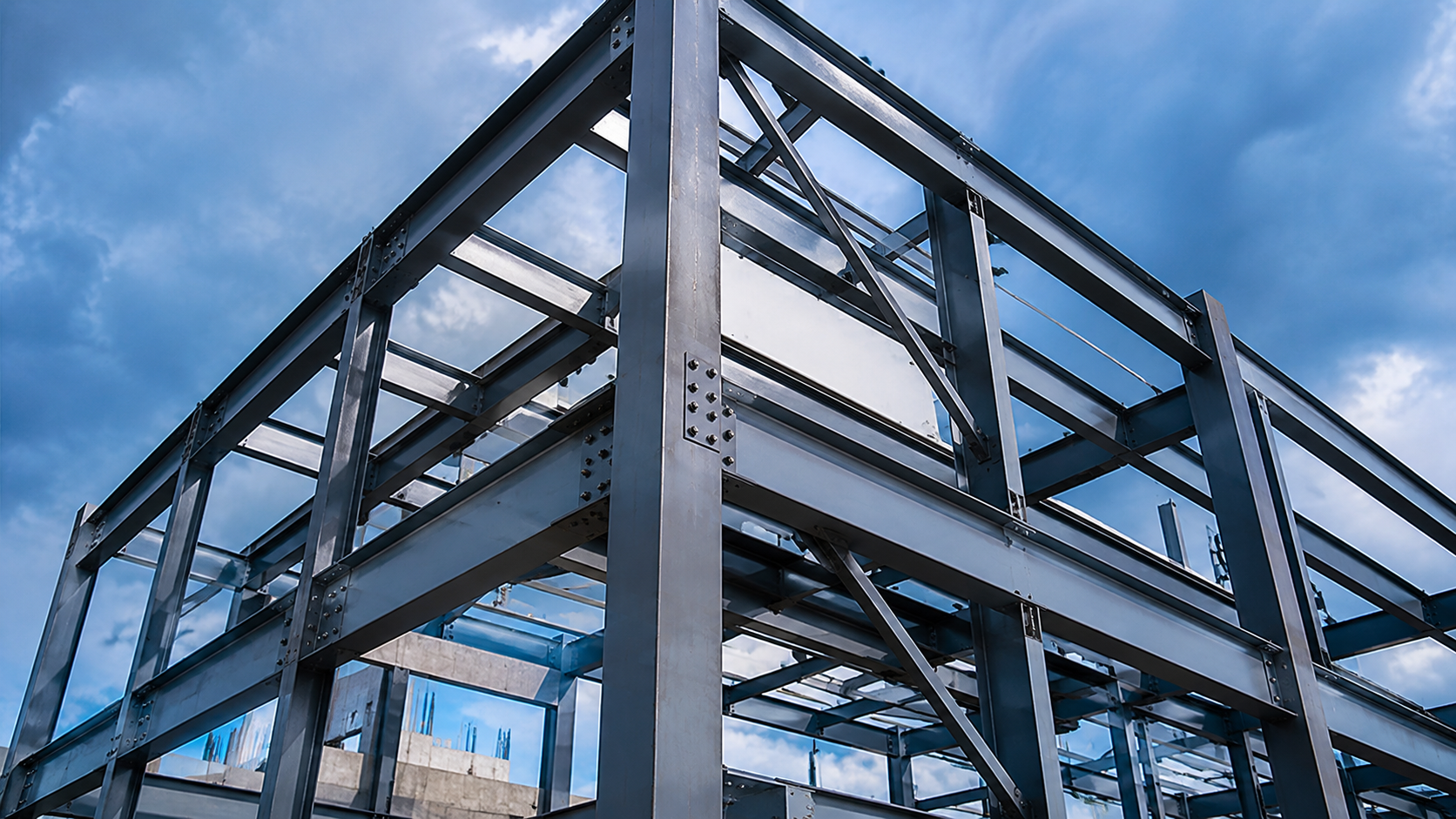
Metal structures are widely used in construction, manufacturing, warehouse infrastructure, agriculture, and household applications. But regardless of their purpose, they all share one common problem — the risk of corrosion. That is why anti-corrosion protection of metal structures is not an optional extra, but a necessary condition for long service life.
Even high-quality metal, without proper protection, gradually begins to deteriorate under the influence of moisture, oxygen, temperature fluctuations, chemicals, and mechanical wear. In many cases, the problem is not the material itself, but mistakes made during surface preparation, coating system selection, or application.
In this article, we explain which mistakes are most often made in anti-corrosion protection of metal structures, why they cause the coating to fail prematurely, and how to avoid these problems.
Why anti-corrosion protection of metal structures is so important
Corrosion does not only affect the appearance of metal. It gradually reduces its strength, reliability, and service life. For load-bearing, technical, or industrial structures, this is especially critical, because it is not only about appearance, but also about safety and repair costs.
The consequences of insufficient protection may include:
- rust appearing soon after painting;
- coating peeling;
- loss of metal strength;
- expensive repair work;
- the need for repainting;
- reduced service life of the structure.
That is why anti-corrosion protection should be considered as a system, not as just one can of paint.
What the durability of an anti-corrosion coating depends on
The corrosion resistance of a metal structure does not depend on one factor alone, but on a combination of decisions:
- the condition of the surface before painting;
- the quality of cleaning and degreasing;
- the correctly selected primer;
- compatibility of materials within the system;
- coating thickness;
- application conditions;
- further service conditions.
If even one of these elements is ignored, even a good product may fail to provide the expected result.
Common mistake No. 1: painting over a poorly prepared surface
This is one of the most common reasons why an anti-corrosion coating does not perform as it should. If rust, dust, grease, mill scale, or weak old layers remain on the metal, the new material has no stable base.
What happens as a result:
- the coating adheres poorly to the surface;
- blistering appears;
- rust continues to develop under the paint layer;
- the system quickly loses its protective properties.
To avoid this, the metal must always be properly prepared before painting.
Common mistake No. 2: underestimating degreasing
Even if the metal looks clean, it may still contain residues of oils, lubricants, technical fluids, or simply fingerprints. Such contamination significantly worsens adhesion.
This may lead to:
- craters;
- local defects;
- weak adhesion;
- uneven wetting of the surface by the coating material;
- coating peeling.
Proper degreasing is a mandatory stage before applying an anti-corrosion system.
Common mistake No. 3: choosing a coating without considering service conditions
One of the main reasons for premature coating failure is the use of a material that does not match the real operating environment.
For example, the same approach cannot be used equally for:
- structures inside a dry room;
- metal exposed outdoors;
- industrial facilities;
- areas with high humidity;
- structures in contact with chemically aggressive environments.
If the system is too weak for the actual conditions, corrosion will appear much faster.
Common mistake No. 4: trying to do without primer where it is needed
Sometimes, to save time or money, people try to paint metal directly with a finishing material. In some cases, this is acceptable only within a specially designed system, but very often this approach becomes a mistake.
Primer performs important functions:
- improves adhesion;
- forms the base anti-corrosion protection;
- helps the finishing coat perform more steadily;
- increases the service life of the entire system.
For critical or outdoor metal structures, a complete system with primer is often much more reliable.
Common mistake No. 5: incorrect coating thickness
Insufficient coating thickness often reduces protective performance, while excessive thickness may cause other problems: longer drying time, cracking, internal stress, or appearance defects.
Common consequences:
- weak barrier protection;
- rapid coating wear;
- unstable drying;
- risk of peeling;
- uneven finish.
That is why it is important not just to “paint the metal,” but to follow the recommended system and the required coating thickness.
Common mistake No. 6: violating intercoat application technology
Even correct materials may fail if the application sequence or intercoat intervals are нарушені.
For example, problems arise when:
- the next coat is applied too early;
- the previous coat has over-dried and no longer has proper intercoat adhesion;
- incompatible products are mixed;
- recommended ratios and application conditions are not followed.
All this directly affects adhesion and coating stability.
Common mistake No. 7: working under improper conditions
The quality of anti-corrosion protection is strongly affected by temperature, humidity, condensation on the metal, and overall application conditions.
Problems often occur when:
- the metal is cold and has moisture on it;
- work is carried out in a damp environment;
- the material is applied outside the recommended temperature range;
- the surface becomes contaminated between preparation and painting stages.
Even a good product cannot compensate for violations of basic application conditions.
Common mistake No. 8: saving on a system approach
Anti-corrosion protection is often oversimplified: “we took some metal paint, and that should be enough.” But for a durable result, what matters is not a single can, but the whole system:
- surface preparation;
- degreasing;
- base coat;
- finishing coat;
- proper thickness;
- compliance with application technology.
When one of these stages is neglected to save money, the result is often much higher costs for repair or repainting later.
How to avoid mistakes in anti-corrosion protection of metal structures
To make the system work longer, it is worth following a simple approach:
1. Assess the service conditions
You need to understand where the structure will work: indoors, outdoors, in a humid environment, in contact with chemicals, or under mechanical load.
2. Prepare the metal correctly
Clean the surface, remove rust, weak layers, dust, and grease.
3. Choose a system, not a single product
The focus should not be only on the enamel, but on the whole set of materials.
4. Follow the application technology
The sequence, thickness, intercoat intervals, and working conditions all matter.
5. Do not simplify protection without a real reason
For critical metal structures, a proper system is almost always more cost-effective than a quick temporary solution.
Which approach works better
For most metal structures, the best result comes not from a random choice of material, but from this logic:
- assessment of the metal condition;
- cleaning and degreasing;
- selection of a suitable anti-corrosion primer or system;
- application of the finishing coat according to the service conditions;
- control of the technology at every stage.
This approach significantly reduces the risk of premature corrosion.
Conclusion
Anti-corrosion protection of metal structures is always a matter of the whole system, not only the choice of paint. The most common mistakes are related to poor metal preparation, lack of degreasing, failure to consider service conditions, incorrect material selection, and violation of application technology.
To make the coating truly protect the metal, you need to work step by step: prepare the surface correctly, choose the right system, and follow the application recommendations. This is what ensures a durable result and helps avoid unnecessary costs in the future.
Need help selecting an anti-corrosion system for metal structures? Contact TOPHIM specialists — we will help you choose the right solution for your type of object, service conditions, and required coating life.