
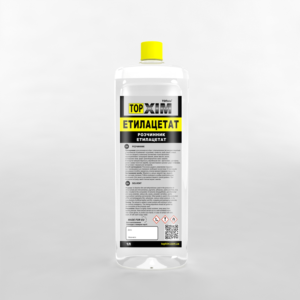
 Ethyl acetate, a colorless and transparent liquid with a characteristic sweet smell, is one of the most common and versatile solvents in modern industry. Thanks to its unique properties, such as low toxicity, pleasant odor, and excellent solvent power, it has found applications in a wide variety of fields—from paint production to the food and pharmaceutical industries.
Key Characteristics of Ethyl Acetate:
- Chemical Formula:
- Density (at 20°C): 0.880-0.882 g/cm³
- Boiling Point: 77°C
- Color (Hazen units): Not more than 10
These properties make it an ideal component in many technological processes.
Key Application Areas of Ethyl Acetate
1. Paint and Varnish Industry:
This is perhaps the most well-known application of ethyl acetate. It acts as an effective solvent for a wide range of materials:
- Nitrocellulose and Ethylcellulose Lacquers and Enamels: Ethyl acetate excellently dissolves these components, ensuring uniform application and rapid drying of the coating.
- Polyester, Epoxy, and Silicone Lacquers: It is included in composite solvent formulations to regulate their viscosity and flow.
- Paints and Pigments: It is used to dissolve film-forming substances and pigments, which are the basis for creating high-quality paints.
2. Printing and Packaging Industry:
The rapid evaporation of ethyl acetate makes it indispensable in the printing industry, especially in flexography and rotogravure printing. It is used as a solvent for printing inks, allowing for clear and vibrant images on various packaging materials, including flexible packaging, labels, and cellophane.
3. Production of Adhesives and Glues:
Ethyl acetate is an important component in the production of many adhesive compositions. It dissolves the polymers that make up the glue, providing the necessary consistency and adhesive properties.
4. Cosmetic and Pharmaceutical Industries:
- Cosmetics: Due to its quick-drying nature and pleasant smell, ethyl acetate is often used in nail polish removers and other manicure products.
- Pharmaceuticals: In the pharmaceutical industry, it is used as an extraction agent to obtain active substances from plant materials, as well as a solvent in the production of medicinal products.
5. Food Industry:
Ethyl acetate is registered as a food additive E1504. It is used:
- As a flavoring agent: It imparts a fruity aroma to products, which is why it can be found in liqueurs, confectionery, and soft drinks.
- For caffeine extraction: Ethyl acetate is used in the process of decaffeinating coffee beans and tea leaves.
6. Production of Artificial Leather, Rubber Goods, and Photographic Film:
In these industries, ethyl acetate is used as a solvent for the polymer materials that form the basis of these products. It helps to achieve the necessary elasticity and strength of the final product.
7. Electronics:
In the electronics industry, ethyl acetate is used for cleaning and degreasing surfaces, particularly in the manufacturing of printed circuit boards and aluminum foil.
Ethyl acetate is a prime example of a substance that, despite its relatively simple chemical structure, plays a crucial role in many aspects of our daily lives. Its versatility as a solvent, combined with its safety and cost-effectiveness, makes it an indispensable component for a wide range of industries that continue to find new and innovative ways to use it.